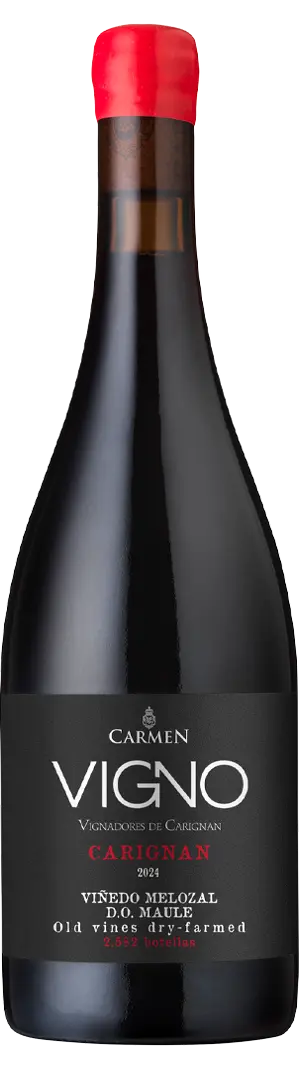
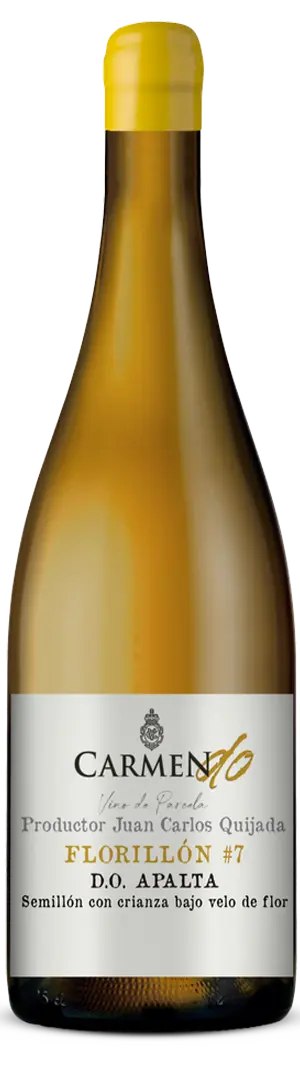
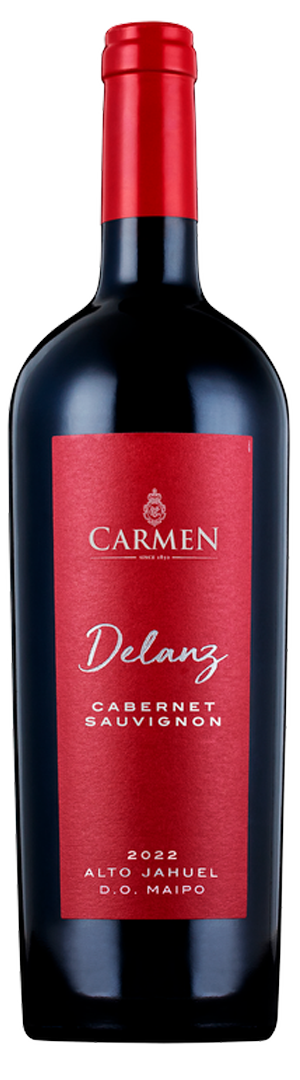
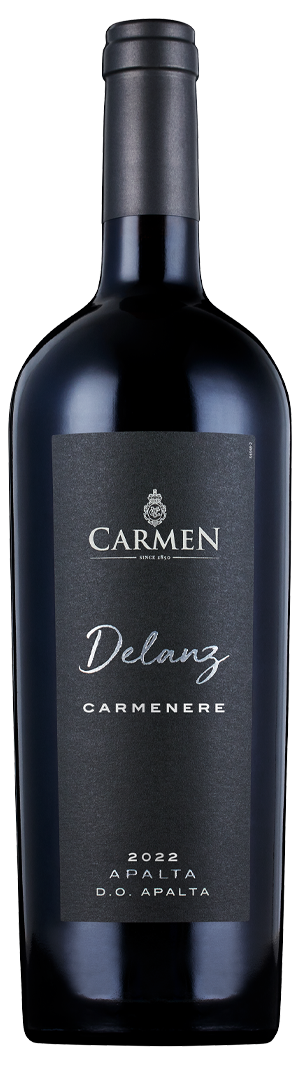
Owners: Grupo Claro
Head Winemaker: Ana María Cumsille
Website: carmen.com
Commercial Contact:
Chile:
Sebastián Gutiérrez
Exports:
Antonio Gauci
 Viña Carmen
Viña Carmen is part of Santa Rita Estates, one of the largest wine groups in South America, which also includes Viña Santa Rita in Chile and Doña Paula in Argentina. Founded in 1850 by Christian Lanz in honour of his wife, Carmen is not only one of Chile’s oldest wineries but also a pioneer of winemaking in the continent. With more than 170 years of history, it has remained at the forefront of Chilean wine, driving innovations that have shaped its identity.
In 1994, the Carmenère grape — believed to have been extinct for over a century — was rediscovered in Carmen’s vineyards in Alto Maipo by the renowned ampelographer Jean-Michel Boursiquot. Just two years later, in 1996, the winery became the first in Chile to bottle and market this variety, under the name Grande Vidure. In 2024, Carmen produced the first sparkling wine made from grapes grown on Chiloé Island, creating the southernmost sparkling wine ever made in Chile and one of the most southerly in the world.
Pushing boundaries has always been part of the winery’s DNA. Carmen’s approach combines a deep respect for origin with a constant search for new expressions, redefining what Chilean wine can be. With a presence in several of the country’s leading wine valleys — including some of its most prestigious terroirs — Carmen’s wines reflect a modern and authentic vision, embracing precision, creativity, and the character of each variety and place. Today, Carmen is present in more than 40 countries and continues to lead with purpose. Its Sustainability Programme spans environmental, social, and economic pillars, ensuring responsible practices from vineyard to community. Every wine carries a commitment to heritage, excellence, and the future of Chilean wine.
Vineyards
Limarí Valley
A 134-hectare vineyard located 28 km from the Pacific Ocean and 400 km north of Santiago. The soils are characteristic of the second terrace of the Limarí Valley, consisting of alluvial deposits with a first layer of clayey texture and a second layer of sandy clay and stones. There are deposits of calcium carbonate between both layers. The climate is strongly influenced by its proximity to the Pacific Ocean and the low hills of the Coastal Mountain Range. Coastal fogs dissipate around noon, allowing temperatures to increase but moderated by cool sea breezes. The proximity to the sea is also evident in the relatively high temperatures in the afternoon, reaching up to 20°C in January, the warmest month of the year. Average annual temperature: 15.3 °C. Average annual rainfall: 150mm. Grape varieties planted: Chardonnay.
Casablanca Valley
Located 80 km from Santiago and close to the Pacific Ocean (only 26 km away). The soils are of colluvial-alluvial origin, with a sandy and sandy loam texture, poor in nutrients, with high permeability and low moisture retention. These attributes result in low yields and highly concentrated varietal characteristics. The vineyards are planted at an average altitude of 500 meters above sea level. The climate is Mediterranean, with an average temperature fluctuation of 16°C between day and night. The proximity to the sea is the most important climatic factor in Casablanca, influencing the cooling of the valley. Average annual temperature: 13.4 °C. Average annual rainfall: 450 mm. Grape varieties planted: Sauvignon Blanc, Chardonnay, Merlot, and Pinot Noir.
Leyda Valley
An 85-hectare vineyard located just 14 km from the Pacific Ocean, on the Coastal Mountain Range, southwest of Santiago. Its soil is clay of granitic origin, shallow. The thermal conditions are Mediterranean, with low temperatures due to the proximity to the sea. Average annual temperature: 14.2 °C. Average annual rainfall: 471 mm. Grape varieties planted: Sauvignon Blanc, Chardonnay, and Pinot Noir.
Maipo Valley
A vineyard located 40 km south of Santiago, at the foothills of the Andes Mountain Range. Soils of alluvial and colluvial origin. Semi-arid Mediterranean climate. The region has a cold winter with moderate rainfall and a hot and dry summer. The thermal fluctuation can reach 20 °C. Average annual temperature: 13.9 °C. Average annual rainfall: 400 mm. Grape varieties planted: Cabernet Sauvignon, Merlot, Petite Sirah, and Cabernet Franc.
Colchagua Valley
A vineyard located 181 km south of Santiago and 45 km from the sea. Soils of volcanic origin, clay, with sandy loam and sandy textures. The climate is strongly influenced by the Coastal Mountain Range. It is dry and warm, with dry summers and rainy winters. Average annual temperature: 14.9 °C. Average annual rainfall: 595 mm. Grape varieties planted: Cabernet Sauvignon, Merlot, Syrah, and Carménère.
Apalta Valley
A vineyard located 190 km south of Santiago. The soils are divided into sectors. High sector: granitic sediments deposited at the base of the hills, with a loamy and sandy texture. Middle sector: granitic sediments deposited at the base of the hills, with an intermediate texture, loamy clay soil. Low sector: alluvial deposits, with a loamy and loamy clay soil. Climate with high thermal fluctuation. Cool breezes from the coast come through the Tinguiririca River. Average annual temperature: 14.7 °C. Average annual rainfall: 684 mm. Grape varieties planted: Cabernet Sauvignon, Syrah, and Carménère.
Chiloé
Located at the southernmost tip of Chile, Chiloé Island is distinguished by its humid oceanic climate, with cool temperatures and high rainfall. These extreme conditions have given rise to wines with high acidity and low alcohol content, showcasing the adaptability of varieties such as Pinot Noir. The development of viticulture in Chiloé has been driven by pioneering projects seeking to explore new terroirs in the south of the country. These initiatives have not only demonstrated the viability of grape cultivation in challenging climates but have also contributed to diversifying the nation’s wine offering, revealing the uniqueness and authenticity of the wines from this region.